
DIY home improvement can be a rewarding way to maintain your property, learn new skills, and take care of smaller projects on your own. However, not every repair is a good candidate for a weekend project. The right choice depends on the complexity of the work, the tools required, the potential consequences of a mistake, and your own experience.
Some projects are primarily cosmetic and can be completed with basic tools and careful preparation. Others involve heights, structural components, water systems, mechanical equipment, or other hazards where an error can create a much larger problem. Knowing the difference can help you avoid turning a manageable repair into an expensive one.
Start With Manageable Interior Improvements

Decorative interior projects are often among the more approachable options for homeowners who want to develop their DIY skills. They typically allow you to work at your own pace, correct small mistakes, and improve your technique without affecting critical home systems.
Installing crown mouldings can be a good example. The work requires accurate measurements, careful cuts, proper fastening, and attention to corners, but it does not normally involve the home’s major mechanical systems. Practicing on scrap pieces first can help you become comfortable with the tools and determine how different corners need to be handled.
Before starting, consider:
- Whether you have the necessary measuring and cutting tools
- How many corners and transitions the project involves
- Whether the walls and ceilings are reasonably even
- How you will handle gaps or imperfect joints
- Whether you have time to complete the finishing work
More complicated rooms may require greater precision. Irregular walls, unusual angles, extensive trim work, or high ceilings can increase the difficulty considerably. If the finished appearance is particularly important, homeowners should be realistic about their skill level before committing to a large installation.
Know When Outdoor Hazards Require Professional Help
Outdoor maintenance can look straightforward until a project involves something large, heavy, unstable, or positioned near a structure. Tree work is one area where homeowners should be especially cautious. Cutting a small branch is very different from taking down an entire tree.
Tree removal can involve significant risks to people, vehicles, roofs, fences, landscaping, and utility lines. The direction in which a tree falls is not always easy to predict, particularly when the tree is leaning, damaged, or growing in a confined space. Working from a ladder or using equipment without appropriate experience can make the situation even more dangerous.
Consider these warning signs:
- The tree is large or severely leaning
- Branches are close to utility lines
- The trunk shows significant damage or decay
- The tree is close to a home or other structure
- Specialized equipment would be required
- There is limited room for the tree or debris to fall
Simple yard maintenance can be a reasonable DIY responsibility, but homeowners should recognize where routine maintenance ends and hazardous work begins. For large or difficult trees, professional assistance can help protect both the property and everyone nearby.
Handle Simple Maintenance Without Creating Bigger Problems
Routine maintenance can be a good way for homeowners to stay involved with their property’s upkeep. Some tasks require little more than basic tools and patience, but even seemingly simple maintenance can become problematic if the underlying issue is misunderstood.
Drain cleaning is a common example. Removing visible debris from an accessible drain or addressing a minor, isolated blockage may be manageable for an experienced homeowner. However, repeatedly treating the same drain without determining why it keeps clogging can leave the actual problem unresolved.
Before attempting a DIY solution, consider:
- Whether only one drain is affected
- Whether water is draining slowly or not at all
- Whether multiple fixtures are showing similar problems
- Whether there are unusual odors or sounds
- Whether the problem returns shortly after cleaning
Homeowners should also avoid using aggressive methods simply because a basic approach has not worked. If a blockage appears to be deeper in the system, repeated attempts can potentially make the situation worse or damage components. A maintenance task should have a clear stopping point. When the problem is recurring, widespread, or difficult to access, it may be time to move beyond DIY troubleshooting.
Recognize When Plumbing Problems Exceed DIY Skills

Minor plumbing maintenance can sometimes be handled by a capable homeowner, but repairs involving hidden pipes, major leaks, or changes to the home’s water system require more caution. A mistake in one area can cause water damage that extends far beyond the original repair.
Before beginning a project, determine whether you actually understand where the affected lines run and what components are involved. A loose connection or accessible fixture may be relatively straightforward, while work behind walls or beneath floors can be much more complicated.
Professional assistance is generally worth considering when:
- A significant leak cannot be isolated
- Water is entering walls, ceilings, or flooring
- Multiple fixtures are affected
- Pipes need to be relocated or replaced
- The repair involves a major system component
- You are unsure how to shut off the affected water supply
Plumbing services can also be useful when a recurring problem suggests that the visible symptom is not the actual cause. Homeowners should not feel obligated to finish a project simply because they started it. If the repair becomes more complicated than expected, stopping early can prevent additional damage and make the eventual repair easier.
Understand the Risks of Working on Your Roof
Roof work is one of the clearest examples of a project where the apparent simplicity of the repair may not reflect the actual risk. Working several feet above the ground introduces fall hazards, while weather, roof pitch, surface conditions, and access can make the job even more challenging.
Homeowners may be comfortable inspecting their roof from the ground or checking easily accessible areas for obvious signs of damage. Actual repairs can be considerably more complicated. A damaged shingle, for example, may be part of a larger problem involving flashing, underlayment, moisture intrusion, or the roof deck.
Before attempting residential roofing work, consider:
- The slope and height of the roof
- Whether the surface is wet or difficult to access
- The extent of the visible damage
- Whether structural damage may be present
- Whether specialized safety equipment is needed
A repair that appears small may also require matching existing materials and understanding how the roofing system is assembled. If the work involves extensive damage, a steep roof, structural concerns, or difficult access, professional assistance is usually a more practical option than taking unnecessary risks.
Know Which Maintenance Tasks Are Better Outsourced
DIY does not always provide the best value, even when a homeowner technically could complete a task. Time, equipment, experience, and the desired result should all be considered before deciding to handle maintenance independently.
Carpet cleaning provides a useful example. Routine spot treatment may be easy to manage, but deeper cleaning can require specialized equipment and techniques. Stubborn stains, embedded dirt, odors, and delicate materials may respond differently depending on how they are treated.
Before deciding whether to handle a cleaning project yourself, consider:
- How extensive the cleaning needs to be
- Whether you have appropriate equipment
- How much time the project will require
- Whether the material has special care requirements
- Whether previous cleaning attempts have failed
Using local carpet cleaning professionals may be worthwhile when the job requires equipment or expertise that you do not already have. This does not mean every cleaning project needs to be outsourced.
Avoid Taking on Major Structural Projects Without Preparation
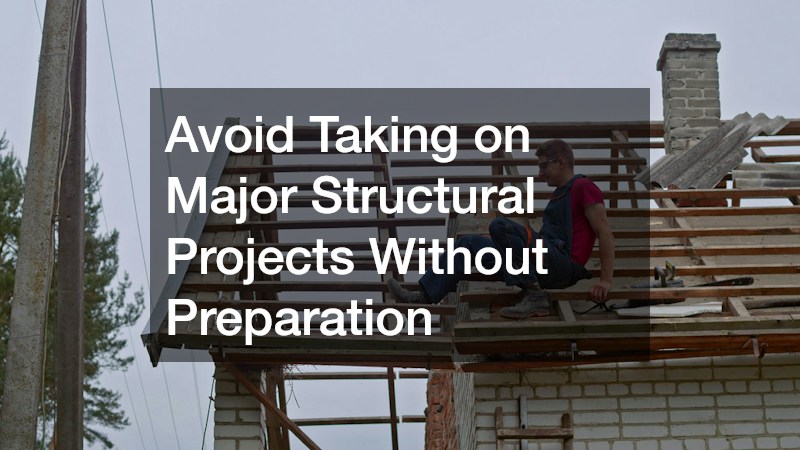
Large exterior projects require more than basic familiarity with household tools. They can involve multiple layers of materials, weather protection, structural considerations, safety procedures, and local requirements. The larger the project, the more important it becomes to understand what happens if something goes wrong.
Roof installation is a particularly demanding example. Proper preparation involves more than placing new materials over an existing surface. The condition of the underlying structure, ventilation, flashing, drainage, material compatibility, and weatherproofing can all affect the finished system.
Homeowners considering a major roofing project should think about:
- Whether the existing structure has been properly evaluated
- How materials will be removed and disposed of
- How the work area will be kept safe
- Whether permits or inspections apply
- How weather could affect the project
- Whether manufacturer requirements must be followed
A mistake on a major exterior project can allow water into the home or create problems that are difficult to detect until later. For inexperienced DIYers, the combination of height, complexity, and consequences makes major structural work a poor place to learn through trial and error.
Break Large Renovations Into Realistic DIY and Professional Tasks
Major renovations often contain both beginner-friendly and highly specialized tasks. That does not mean homeowners need to hand over an entire project to a contractor. Instead, it can be useful to divide the renovation into individual tasks and determine which ones match your abilities.
Kitchen remodeling is a good example because a single renovation can involve painting, flooring, cabinetry, plumbing, electrical work, appliances, and structural changes. Some cosmetic tasks may be manageable for an experienced DIYer, while specialized work may require qualified professionals.
When planning a renovation, separate tasks into categories such as:
- Cosmetic work and finishing
- Demolition and preparation
- Plumbing or electrical changes
- Structural modifications
- Cabinet and fixture installation
This approach can help homeowners participate without taking on work they are not prepared to complete. It also helps with scheduling because specialized work may need to happen in a particular order. Before removing cabinets or opening walls, determine what systems are behind them and what other work will follow.
Repair Minor Exterior Damage Before It Becomes Extensive
Small exterior repairs can sometimes be appropriate for homeowners who are comfortable using basic tools. The important distinction is whether the visible damage is truly minor or whether it indicates a larger structural problem.
Fence repair, for example, may involve replacing a damaged board, tightening hardware, or addressing a small section of cosmetic deterioration. Before making the repair, homeowners should inspect the surrounding posts, supports, gates, and ground conditions. A new board will not solve the problem if the underlying post is unstable or significantly damaged.
Before starting, check:
- Whether posts are stable
- Whether surrounding boards show similar deterioration
- Whether hardware is damaged or corroded
- Whether the fence has shifted or started leaning
- Whether the damage extends beyond one small area
Matching replacement materials to the existing fence can also improve the finished appearance. However, homeowners should avoid treating extensive damage as a series of small repairs. Significant rot, storm damage, unstable posts, or widespread deterioration may indicate that a larger repair or replacement is needed.
Leave Mechanical Installations to Qualified Professionals

Some home systems are simply too complex to treat as beginner DIY projects. Mechanical installations can involve specialized equipment, technical requirements, connections, safety considerations, and local codes. Even if a homeowner understands the general purpose of a system, that does not necessarily mean they have the training or equipment to install it correctly.
HVAC installation is one example. Proper system performance depends on more than connecting equipment and turning it on. Equipment selection, sizing, ductwork, electrical connections, ventilation, refrigerant, and other technical considerations can all affect the finished system.
Homeowners can generally focus their DIY efforts on simpler maintenance tasks, such as:
- Replacing appropriate filters
- Keeping accessible equipment areas clear
- Checking visible components for obvious problems
- Keeping outdoor units free from debris
- Monitoring changes in system performance
A full installation is different from routine maintenance. If equipment needs to be replaced, relocated, connected to major systems, or configured as part of a new installation, professional help is a more appropriate choice.
The best DIY home repairs are not necessarily the easiest projects. They are the projects that match your skills, available tools, time, and ability to manage the potential consequences of a mistake. Decorative improvements and straightforward maintenance can be good ways to build experience, while complex systems and hazardous work require a more cautious approach.
Being a capable DIYer also means knowing when to stop. Hiring help is not a failure to complete the project yourself. In many cases, it is the most practical way to protect your home, your time, and your investment. The smartest approach is to take on the work you can handle confidently and leave higher-risk projects to qualified professionals.