In modern construction, durability is no longer optional—it is a baseline requirement. Buildings are expected to perform for decades under constant environmental and structural stress, making material longevity a key driver of cost efficiency and sustainability. Longer-lasting materials reduce maintenance cycles, minimize resource consumption, and support more resilient infrastructure. As a result, architects and engineers increasingly rely on scientific advancements to guide material selection and design. Understanding what makes materials endure is essential to building structures that stand the test of time.
What Makes Building Materials Last?
Durable building materials are defined by a combination of physical and chemical properties that resist deterioration. High tensile strength allows materials to withstand loads and stress without deforming, while resistance to corrosion protects against moisture, chemicals, and pollutants. Thermal stability is equally critical, ensuring materials can endure repeated expansion and contraction without cracking. These properties are not accidental—they are engineered through careful composition and processing.
The role of metallurgy is especially important in enhancing the performance of metals used in construction. By refining metal compositions and microstructures, engineers can improve strength, flexibility, and corrosion resistance. This level of control ensures that materials like steel perform reliably across a wide range of structural applications. Combined with advances in composites and treated materials, modern construction benefits from a highly optimized material toolkit.
How the Environment Affects Material Longevity
Environmental exposure is one of the most significant factors influencing how long materials last. Temperature fluctuations cause expansion and contraction, which can lead to fatigue and cracking. Moisture introduces risks such as corrosion in metals and mold or rot in organic materials. Over time, even minor environmental stressors accumulate, gradually weakening structural components.
Geographic location plays a decisive role in material performance. Coastal environments, for example, expose materials to salt-laden air that accelerates corrosion, particularly in untreated metals. In contrast, arid regions demand materials that can withstand intense heat and UV exposure without degrading. Cold climates introduce freeze-thaw cycles that can damage concrete and other porous materials. Selecting materials tailored to these conditions is essential for long-term performance.
Design strategies also contribute to durability. Features such as overhangs, drainage systems, and ventilation reduce direct exposure to damaging elements. Protective coatings further extend material lifespan by creating barriers against moisture, UV radiation, and pollutants. Hydrophobic treatments, for instance, help prevent water penetration, which is a leading cause of structural degradation. Together, these approaches ensure that materials are not only strong but also shielded from avoidable damage.
Most Durable Building Materials Today
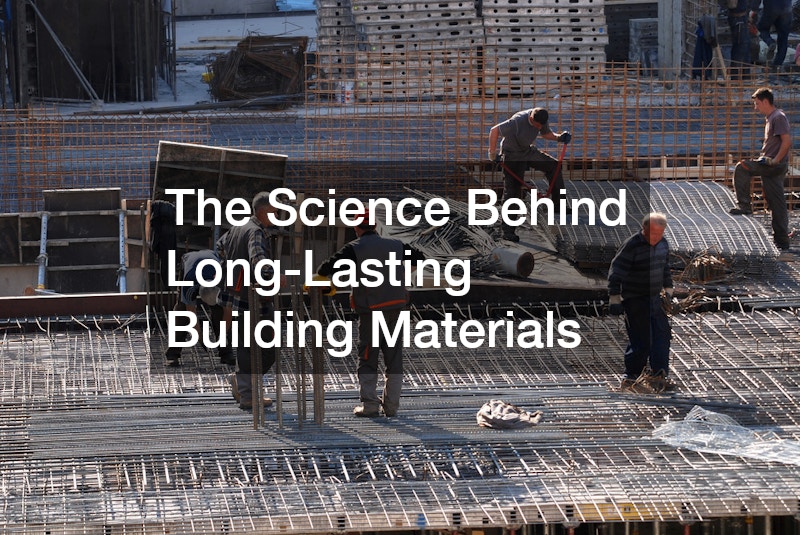
Concrete remains one of the most widely used and durable construction materials. Reinforced with steel and enhanced by modern admixtures, it offers exceptional compressive strength and longevity. Innovations such as self-compacting and fiber-reinforced concrete reduce internal weaknesses and improve resistance to cracking. When properly designed and maintained, concrete structures can last over a century.
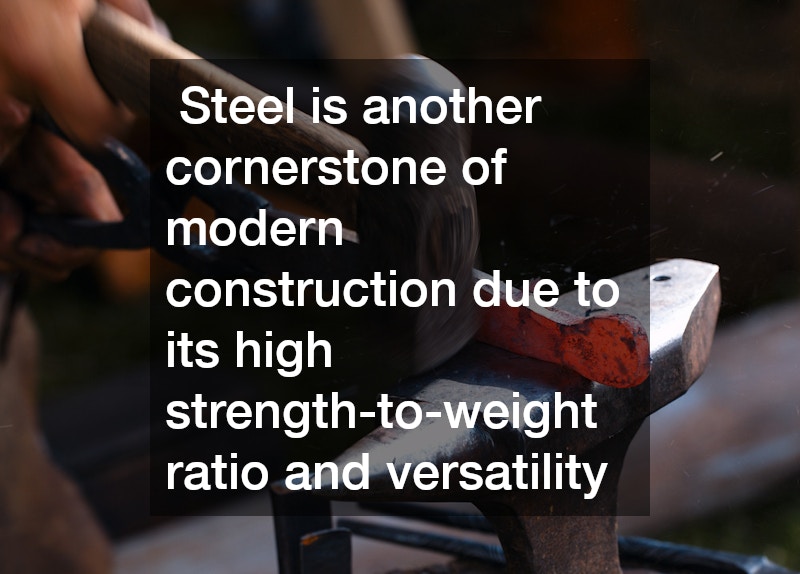
Steel is another cornerstone of modern construction due to its high strength-to-weight ratio and versatility. Alloying elements like chromium improve corrosion resistance, while processes such as galvanization add protective coatings that extend service life. Steel’s durability depends heavily on proper treatment and maintenance, but when managed correctly, it provides long-term structural reliability.
Composite materials are increasingly used in specialized applications where traditional materials fall short. Glass fiber and carbon fiber composites offer high strength with low weight, along with excellent corrosion resistance. These properties make them ideal for harsh environments and complex structural designs. As research advances, composites are becoming more cost-effective and widely adopted.
Natural materials like stone and brick continue to prove their value through longevity and low maintenance requirements. Stone structures can last for centuries with minimal degradation, while brick offers durability alongside thermal efficiency and fire resistance. Modern construction often combines these traditional materials with contemporary treatments to enhance their performance even further.
How Technology Is Improving Durability
Technological innovation is reshaping how building materials are developed and tested. Nanotechnology, for example, enhances materials at the molecular level, improving strength, reducing permeability, and increasing resistance to environmental damage. These microscopic improvements translate into significant gains in durability and performance.
Smart materials are another breakthrough. Self-healing concrete, which uses embedded agents to repair cracks automatically, reduces maintenance needs and extends structural lifespan. This type of innovation addresses one of the most common causes of material failure—small cracks that expand over time.
Advanced simulation and testing tools also play a critical role. Engineers can now model how materials will perform under various stress conditions before they are ever used in construction. This predictive capability allows for more precise material selection and design, reducing the risk of premature failure. Data-driven approaches ensure that materials meet strict performance standards before deployment.
Challenges in Developing Long-Lasting Materials
Despite these advancements, developing durable building materials presents ongoing challenges. Cost remains a major factor, as high-performance materials and advanced processing techniques often require significant upfront investment. However, these costs are frequently offset by reduced maintenance and longer service life.
Sustainability is another concern. Many durable materials rely on energy-intensive production processes, creating tension between longevity and environmental impact. The industry is working to develop alternatives that balance durability with reduced carbon footprints, but achieving both goals simultaneously remains complex.
The science behind long-lasting building materials is a convergence of engineering, environmental awareness, and technological innovation. From the refinement of metals through metallurgy to the development of self-healing materials, the industry continues to push the boundaries of durability. By selecting the right materials and designing with environmental conditions in mind, builders can create structures that remain safe, efficient, and resilient for generations.